|
|
The following photos are presented courtesy of William T. Larkins and with his permission. Mr. Larkins is an American Aircraft Historian. The photos are from his book "U.S. Navy Aircraft" 1921-1941".
 |
 |
 |
 |
| DB-4H1 | Curtis F-5L | Grumman J2F-2 | Sikorsky JS-1 |
 |
 |
 |
 |
| Grumman JF-1 | Martin PM-1 | USS Wright AV1 | Douglas RD-2 |
 |
 |
 |
 |
| Douglas T2D-1 | Martin PM-2 | Martin PM-2 | |
 |
 |
 |
 |
| JRS-1 | 1-J-22 | 1-J-2 | PN-12 |
 |
 |
 |
 |
| JH-1 #0909 with #0908 | DouglasRD2 | 1-J-17 | MartinPM2 |
|
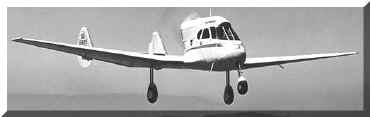
In 1936 the Navy began another drone program which was intended to provide realistic targets for antiaircraft gunnery practice but which directly influenced missile development. Lieutenant Commander (later Rear Adm.) D.S. Fahrney was in charge of the project. The plane used was a Stearman-Hammond JH-1, and the radio control equipment was again developed by the Naval Research Laboratory. This drone made its first successful flight Nov. 15, 1937. The following summer such a drone was first used for target practice by the antiaircraft batteries of the USS Ranger. (July 21, 1936: Lt. Comdr. D. S. Fahrney (USN) ordered to implement recommendation made to Chief of Naval Operations to develop radio-controlled aircraft for use as aerial targets. Reporting to BuAer and NRL, Fahrney subsequently reported on procedure to obtain drone target planes, but also recognized the feasibility of using such aircraft as guided missiles. ) Hammond JH 1937 = USN version of Y-1S with similar specs and data. POP: 2 as JH-1 [0908/0909]. Tests with two Stearman-Hammond JH-1s were very secret at the time and little has been published about them. They were painted yellow, the standard for primary trainers, and classified as Utitlity (J) planes to hide their identity as one of the very first radio-controlled aircraft in the USN. Both planes were tested as unmanned drone targets for anti-aircraft fire, and both were assigned to Utility Squadron One (VJ-1). Rumors had it are that both were shot down, but there is no confirmation of this, and the aircraft history card for [0908] simply says "crashed Nov 7, 1938," and [0909] was stricken off on Sep 13, 1938, according to a Confidential letter from the Officer in Charge of Radio-Controlled Aircraft, Base Force, Utility Wing.
Hammond Y-1S (Y-150) 1937 (644) = 2pClwM; 150hp Menasco C-4S; span: 40'0" length: 26'11" load: 768# v: 130/121/39 range: 480. Improved Y-125. About $5,000; POP: 14, [NC15521/15533, PHAPY], of which 2 to USN as JH-1. Project was dropped in 1938 because of buyer reluctance over high price. |

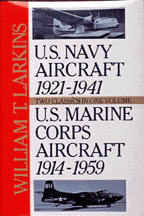
More than thirty years after their first publication, William T. Larkins's illustrated surveys of Navy and Marine Corps aircraft remain two of the most valuable books about these airplanes ever written. First published in 1959 and 1961, these two volumes have become classics eagerly sought in the rare-book market by aviation buffs worldwide. They have become the criteria against which serious aviation research is measured. With over 1,000 photographs combined, they remain the definitive record of the formative years for Navy and Marine Corps aviation. Larkins's emphasis throughout is on squadron use, experimental and one-of-a-kind types, insignia, colors and marking schemes, technical innovations, and the service duty and tactical deployment of the various aircraft.
|
AIRCRAFT ASSIGNMENT FOR VJ-1 - 1926-1941 |
|
|
July 1926 |
2 H-16, 2 SC-I, MO-I, PN-7* (1 each if no total given) |
|
Sept 1927 |
2 UO-1C, 2 H-16, F-5-L, PN-7, PN-10, OL-I, NB-1 |
|
Sept 1928 |
5 OL-8, 2 PN-12, 3 T2D-I, PN-10, FU-2 |
|
Sept 1929 |
2 FU-2, 11 OL-8, 6 T2D-1, 2 XPS-2, UO-I, 02U-1 |
|
June 1930 |
3 FU-2, 5 OL-8, UO-I, PN-12 |
|
June 1931 |
4 FU-2, 6 OL-8, XRS-2, RS-3 |
|
Oct 1932 |
3 PM-2, 4 OL-8, 2 OL-9, XRS-2, RS-3, 02U-3 |
|
June 1933 |
3 PM-2, 3 OL-8, RD-I, RD-2, OL-9, XRS-2, XO2L-1, XO2L-2 |
|
June 1934 |
OL-8, OL-9, RD-2 |
|
June 1935 |
3 PM-2, 6 JF-I, 03U-I, RD-2, RD-3 |
|
June 1936 |
3 PM-2, 3 JF-I, PM-I, RD-3 |
|
June 1937 |
6 PM-2, 5 JF-1, RD-2 |
|
June 1938 |
3 PM-2, 6 JF-1, 6 JRS-I, 2 TG-2, 2 N2C-2, RD-3, 03U-1 |
|
June 1939 |
8 J2F-2, 3 J2F-3, 8 JRS-I |
|
June 1940 |
2 J2F-I, 5 J2F-2, 3 J2F-3, 8 JRS-I, JRF-IA |
|
Sept 1941 |
2 J2F-1, 4 J2F-2, 2 J2F-4, 10 JRS-1, J2F-3, F4B-4A |
*
Source: Monthly Status of Naval Aircraft. Totals are one (1) unless otherwise indicated.W.T. Larkins 11-20-00